
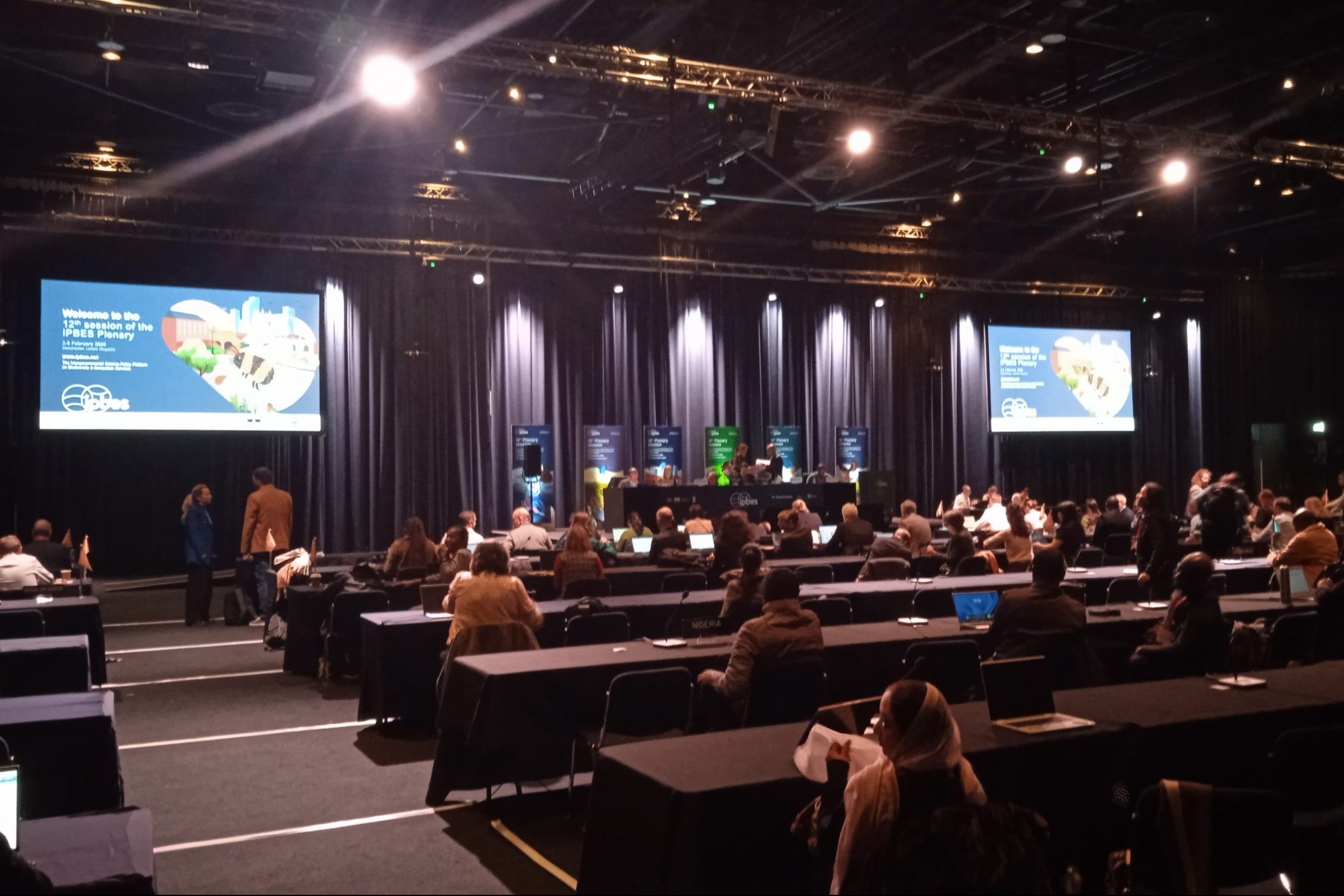
The Condatis team, led by Jenny Hodgson, had the privilege of attending the 12th Plenary Session of the Intergovernmental Science-Policy Platform on Biodiversity and Ecosystem Services (IPBES 12), hosted in Manchester by the UK government in February 2026.
Most people with careers in ecology or conservation will have heard of IPBES and the reports they publish, but far fewer understand it’s inner workings. Ultimately, the only way to find out is to get involved, either online or in person.
This Plenary session gathered Governments, Scientists and Biodiversity Leaders from over 150 countries, to discuss and approve a major new intergovernmental scientific report on business and biodiversity. It also considered suggestions for the topics of future IPBES assessments. While priority is given to suggestions posed by the representatives of the attending Governments and NGOs, the panel gives the opportunity to ‘observer institutions’ to contribute. Jenny Hodgson, acting as an observer for the University of Liverpool, joined forces with Caroline Howe (British Ecological Society, Imperial College London), and Lindsay Banin (UK Centre for Ecology & Hydrology) to present a statement with specific suggestions for a potential future report on “Biodiversity & Climate Change”.
The statement proposed some ideas for a future-thinking and solutions focussed assessment that will enable governments to act to bend the curve on biodiversity loss. In particular, they recommended that an assessment on Biodiversity & Climate Change should emphasise the creation, restoration and maintenance of resilient ecosystems in the face of climate change; the policies expected to deliver successful outcomes; and the adaptation of human and ecological systems under environmental change to ensure a just and sustainable transition that reduces risk and increases security.
The statement ended with a call to the community to enable action through evidence-based guidance, so the vision of bending the curve becomes a reality.
Jenny said, “As scientists, we witnessed the crucial importance of government buy-in to IPBES, in a way that is difficult to appreciate unless you attend the Plenary. The extended negotiating over every paragraph before a report is published, is what gives them political weight, such that they are not just another academic review. Nevertheless, there was some soul-searching and, frankly, some impatience on show in the session that considered the future priorities of IPBES to 2030 and beyond. Governments are committed enough to send highly knowledgeable, well-prepared delegations to IPBES. But when those delegations go home, do they or the insights they carry have any effect on the policymaking process? When systemic change is needed across all sectors and at all organisational levels, it cannot just be the job of IPBES to get exactly the appropriate information to the right people.”
Manchester is no stranger to revolutions in how business is conducted and, as IPBES Chair Dr. David Obura said, “Manchester and the UK are now ground zero for the science that will inform global policy and action on business and nature.”